East Kingston Fire Department

Official Website

  • Home
  • Mission
  • Join Us
  • Personnel
  • Resources
  • Gallery
  • Contact Us
  • News Blog
  • ALS Services

New Video Highlights Risks of Lithium-Ion Batteries

July 30, 2024 by Tom Zuppa

The Fire Safety Research Institute has released a new video as part of its Take C.H.A.R.G.E. of Battery Safety campaign, to explain how to take precautions to protect your loved ones while using lithium-ion battery-powered devices and what to do in case of an emergency.

More tips can be found here.
Filed Under: News, Safety Tips

East Kingston Fire Department Offers Grilling Safety Tips Ahead of Summer

July 12, 2024 by jgprstaff

Chief Ed Warren and the East Kingston Fire Department would like to share summer grilling and outdoor cooking safety tips.

According to the National Fire Protection Association (NFPA), gas grills are the cause of an average of 9,079 home fires, 4,454 structure fires, and 4,625 outdoor fires annually.

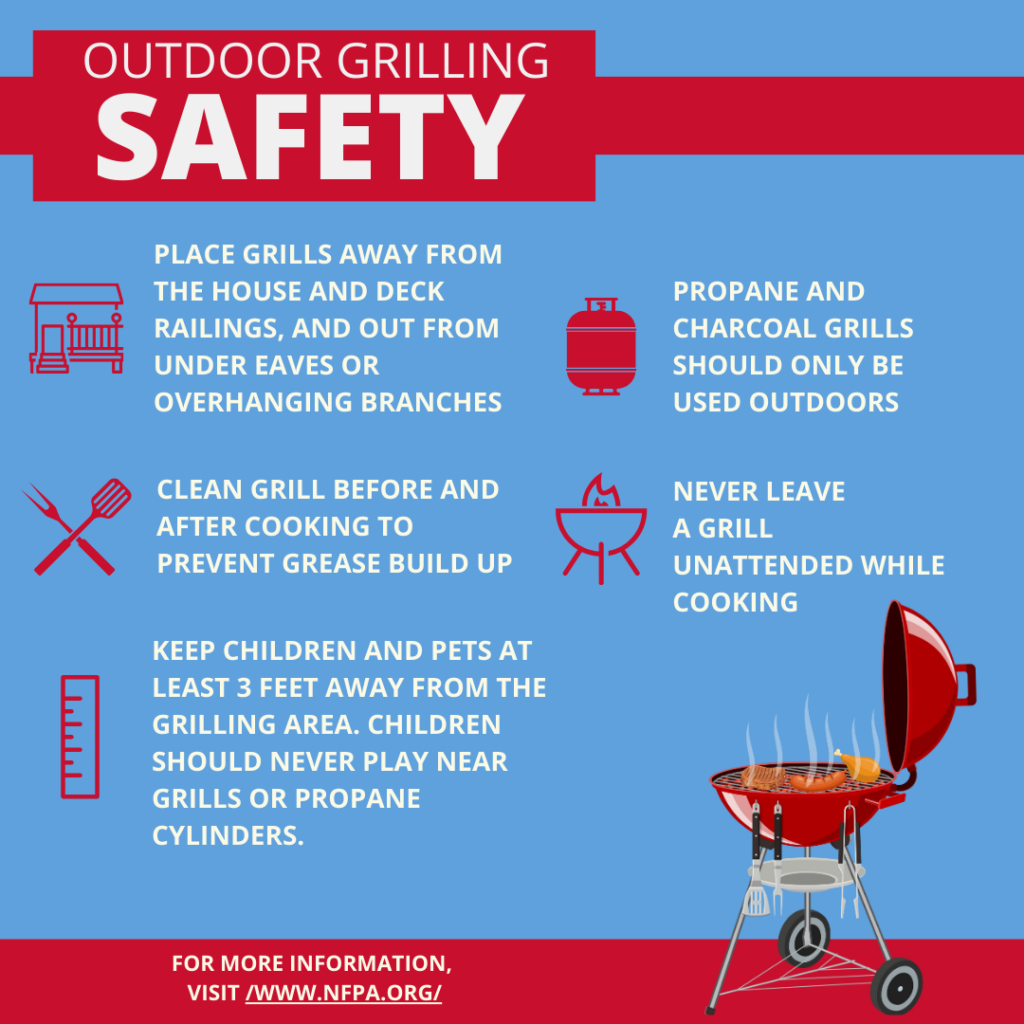
As summer kicks off, the East Kingston Fire Department would like to share the following grilling and outdoor cooking safety tips from the NFPA with residents and community members.

While Cooking/General Tips

  • Grills should only be used outdoors.
  • Keep grills or outdoor cooking items away from the home.
  • Grills should never be used or set up on closed porches or the second-story of a home or apartment building.
  • Clean the grill before and after cooking to prevent grease build-up.
  • Never leave a grill unattended while cooking and ensure it is off before returning to the home or leaving the property.
  • Children and pets should be kept at least 3 feet away from the grilling area and grilling equipment, including propane tanks.
  • Keep an extinguisher or water source nearby in case the fire from the grill gets out of control.
  • Keep heat sources, and ignitions including lighters and matches, away from open fires and grills.

Propane Grills

  • Check the tank hose for leaks before using it. Apply a light soap and water solution to the hose to check for a leak. If there is a propane leak bubbles will be released.
  • If it smells like gas while cooking, safely turn off the grill and call 911 from a safe location.
  • Do not smoke while handling a propane tank.
  • If the flame goes out, turn the grill and gas off and wait at least five minutes before re-lighting it.
  • When storing propane, keep in a cool, dry place outdoors and at least 10 feet away from a house, deck, or structure.

Charcoal Grills 

  • Only use charcoal starter fluid when starting a charcoal grill. Do not use gas or other lighter fluids.
  • Let the coals cool completely before disposing. Dispose of coals in a cool metal container.
  • Keep charcoal starter fluid out of the reach of children and away from heat sources.
  • There are also electric charcoal starters, which do not use fire. Be sure to use an extension cord for outdoor use.

In case of an emergency call 911.

The East Kingston Fire Department would like to wish residents and community members a safe grilling season!

###

Filed Under: News, Safety Tips

Fire Department Warns of Hazardous Weather Outlook, Offers Safety Tips

June 17, 2024 by Tom Zuppa

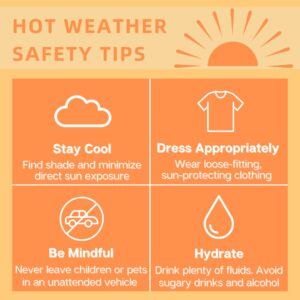
The Fire Department wishes to share tips for residents to stay safe, cool, and healthy with severe heat expected in the coming days.

The National Weather Service issued a Hazardous Weather Outlook through Sunday. During this time, heat index values are expected to climb as high as 104 degrees. Temperatures may reach a high of 96 degrees during the day, with not much relief during the overnight hours, as heat indexes are only expected to drop into the 70s.

Even in short exposure periods, severe temperatures such as these can be extremely hazardous and at times fatal. According to the National Weather Service, approximately 1,220 people die each year from extreme heat. Despite the threat heat poses to the body, heat-related deaths and illnesses are preventable.

To stay healthy and safe during the heat advisory, the department would like to offer the following tips from the National Weather Service, Centers for Disease Control and Prevention (CDC), and the American Red Cross.

Heat Safety Tips:

  • Stay hydrated by drinking plenty of fluids. Replace salt and minerals with snacks or a sports drink.

  • KEEP COOL – Spend as much time as you can in cooler surroundings. Use air conditioners to cool the air. Do not rely on a fan as your primary cooling device during a heat advisory.

  • Check on family, friends and neighbors who do not have air conditioning, who spend much of their time alone or who are more likely to be affected by the heat

    • Factors that may impact a person’s ability to cool off during a heat wave include age, weight, dehydration, heart disease, poor circulation, sunburn, and prescription drug and alcohol use.

    • In particular, those over age 65 or under age two, people with chronic medical conditions, and pregnant women are those at the highest risk during an extreme heat event.

  • If someone doesn’t have air conditioning, they should seek relief from the heat during the warmest part of the day in places like libraries, theaters, malls, etc.

  • Protect yourself from the sun by wearing a wide-brimmed hat, sunglasses, and by putting on sunscreen of SPF 15 or higher 30 minutes prior to going out.

  • Wear loose-fitting, lightweight, light-colored clothing. Avoid dark colors because they absorb the sun’s rays.

  • Slow down, stay indoors, and avoid strenuous exercise during the hottest part of the day, which is typically around 3 p.m.

  • Postpone or withdraw from outdoor games and activities if the temperature is too hot.

  • Use your stove less and try to cook your meals in the cooler part of the day.

  • Take frequent breaks if working outdoors. The CDC recommends workers performing heavy-duty work in 96-degree temperatures should work for 45 minutes and rest for 15.

  • Hot cars can be deadly. It is never safe to leave a child, disabled person, or pet in your vehicle. Cars can quickly reach 100-degree temperatures, leaving unattended passengers vulnerable to sudden heat-related illnesses.

    • Always leave your car locked when you are not using it, even in your own driveway.

  • Check on animals frequently to ensure that they are not suffering from the heat. Make sure they have plenty of cool water. Do not leave your animals outdoors unattended for more than 15 minutes.

  • Parents should limit playtime at peak sun exposure time and familiarize themselves with the signs of heat illnesses. Any playground equipment or outdoor toy that is hot to the touch is too hot for a child to safely use.

The department also reminds the community to remain vigilant for signs and symptoms of heat stroke, including:

  • A fever above 103 degrees

  • Hot, red, dry, or damp skin

  • Rapid, strong pulse

  • Headache

  • Dizziness

  • Fainting

  • Confusion

  • Nausea

In case of heat stroke, call 911 immediately. Move the person into a cool place. Attempt to cool the body down using wet cloths, fanning, misting, or a cool bath. Do not give the person anything to drink.

Also, be on the lookout for the following symptoms of heat exhaustion:

  • Heavy sweating

  • Cold, pale, and clammy skin

  • Fast, weak pulse

  • Nausea or vomiting

  • Muscle cramps

  • Tiredness or weakness

  • Fainting

  • Dizziness

For more information about heat stroke and heat exhaustion from the CDC, click here.

In case of heat exhaustion, move to a cool place, tighten any loose clothing, attempt to cool the body, and sip water slowly.  Seek medical help immediately if vomiting occurs, symptoms last longer than an hour or get worse, or if confusion develops.

Dial 911 in case of any severe illnesses or injuries.

The department would like to remind the community that maintaining health and safety during a heat advisory is everyone’s responsibility. Stay vigilant and keep an eye on yourself and those around you. Although the hot weather may seem like a great opportunity to spend time outdoors, keep in mind that heat-related illnesses can affect anyone if not taken seriously.

Filed Under: News, Safety Tips Tagged With: hot weather

East Kingston Fire Shares Summer Fire Safety Tips from NH Department of Safety and NH Fire Marshal’s Office

May 24, 2024 by Kayla Rochon

The East Kingston Fire Department would like to share the following fire safety tips from the NH Department of Safety and the NH Fire Marshals Office, about celebrating safely this summer.

Risk Reduction Quarterly News Letter-Summer Safety

Celebrate Safely-Fireworks Brochure


Filed Under: News, Safety Tips

East Kingston Fire Department Reminds Residents to Change Clocks and Check Alarms as Daylight Saving Time Begins

March 9, 2024 by jgprrobert

Chief Edward Warren and the East Kingston Fire Department remind residents to check their smoke and carbon monoxide alarms when setting their clocks ahead for Daylight Saving Time this weekend.

Daylight Saving Time begins at 2 a.m. on Sunday, March 10, and clocks will be moved ahead one hour at that time.

Smoke alarms that are properly installed and maintained are crucial life-saving devices that allow time to escape in the event of a fire. According to the National Fire Protection Association (NFPA), from 2014-2018, almost three out of every five home fire deaths resulted from fires in homes with no smoke alarms (41%) or no working smoke alarms (16%).

The risk of dying in reported home structure fires is 55% lower in homes with working smoke alarms than in homes with no alarms or none that worked, according to the NFPA.

Furthermore, according to the Centers for Disease Control and Prevention, each year, more than 400 people in the U.S. die from unintentional CO poisoning not linked to fires, more than 100,000 visit the emergency room, and more than 14,000 are hospitalized.

Residents are encouraged to review the following safety tips, courtesy of the NFPA, to keep their homes and loved ones safe:

  • Test all smoke and CO alarms at least once a month, pressing the test button to ensure the alarm functions properly.
  • Smoke alarms with non-replaceable 10-year batteries are designed to remain effective for up to 10 years. If the alarm chirps warning that the battery is low, replace the entire smoke alarm right away.
    • Alarms with any other type of battery need a new battery at least once a year. When you change your clocks, also replace regular batteries in smoke and carbon monoxide alarms.
  • Smoke and CO alarms should be maintained and replaced according to the manufacturer’s instructions.
  • Smoke alarms should be installed inside each bedroom, outside each sleeping area and on every level of the home, including the basement. On levels without bedrooms, install alarms in the living room (or den or family room) or near the stairway to the upper level, or in both locations.
  • CO alarms should be installed in a central location outside each sleeping area and on every level of the home and in other locations where required by applicable laws, codes or standards.
  • For the best protection, interconnect all smoke alarms, and all CO alarms. When one sounds, they all sound.
  • If the CO alarm sounds, immediately exit the house or building and move outside to an area of fresh air, ensuring each person inside the home is accounted for. Then call 911 and await instructions from emergency personnel.
  • Working with each member of the household, create and practice a home escape plan. Make sure everyone in the home understands the sound of the smoke alarm and knows how to respond.

The NFPA also notes that today’s smoke alarms are more technologically advanced to respond to a multitude of fire conditions, yet mitigate false alarms. Residents are reminded that smoke and carbon monoxide alarms are not interchangeable and should never be disconnected. 

For additional information on installing and maintaining smoke alarms, click here. For additional information on CO alarm safety, click here.

###

Filed Under: Safety Tips

  • « Previous Page
  • 1
  • 2
  • 3
  • 4
  • 5
  • 6
  • Next Page »
Seal of the Town of East Kingston

Follow EKFD on Twitter

My Tweets

Subscribe to EKFD's News Blog via Email

Enter your email address to subscribe to this blog and receive notifications of new posts by email.

Join 42 other subscribers
Seal of the State of New Hampshire
East Kingston town seal on a fire truck

Change your clock, change your battery

East Kingston Fire Department

Chief Edward Warren

5 Main Street (NH State Route 107)
PO Box 171
East Kingston, New Hampshire, 03827

(603) 642-3141
Emergency: 911

Station is staffed 7 days a week per diem.

Copyright © 2026 East Kingston Fire Department · Site Design Donated by John Guilfoil Public Relations LLC and Northeastern University Student Monica Vallejo.
Loading Comments...