East Kingston Fire Department

Official Website

  • Home
  • Mission
  • Join Us
  • Personnel
  • Resources
  • Gallery
  • Contact Us
  • News Blog
  • ALS Services

Fire Department Warns of Hazardous Weather Outlook, Offers Safety Tips

June 17, 2024 by Tom Zuppa

The Fire Department wishes to share tips for residents to stay safe, cool, and healthy with severe heat expected in the coming days.

The National Weather Service issued a Hazardous Weather Outlook through Sunday. During this time, heat index values are expected to climb as high as 104 degrees. Temperatures may reach a high of 96 degrees during the day, with not much relief during the overnight hours, as heat indexes are only expected to drop into the 70s.

Even in short exposure periods, severe temperatures such as these can be extremely hazardous and at times fatal. According to the National Weather Service, approximately 1,220 people die each year from extreme heat. Despite the threat heat poses to the body, heat-related deaths and illnesses are preventable.

To stay healthy and safe during the heat advisory, the department would like to offer the following tips from the National Weather Service, Centers for Disease Control and Prevention (CDC), and the American Red Cross.

Heat Safety Tips:

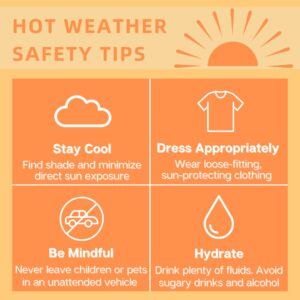
  • Stay hydrated by drinking plenty of fluids. Replace salt and minerals with snacks or a sports drink.

  • KEEP COOL – Spend as much time as you can in cooler surroundings. Use air conditioners to cool the air. Do not rely on a fan as your primary cooling device during a heat advisory.

  • Check on family, friends and neighbors who do not have air conditioning, who spend much of their time alone or who are more likely to be affected by the heat

    • Factors that may impact a person’s ability to cool off during a heat wave include age, weight, dehydration, heart disease, poor circulation, sunburn, and prescription drug and alcohol use.

    • In particular, those over age 65 or under age two, people with chronic medical conditions, and pregnant women are those at the highest risk during an extreme heat event.

  • If someone doesn’t have air conditioning, they should seek relief from the heat during the warmest part of the day in places like libraries, theaters, malls, etc.

  • Protect yourself from the sun by wearing a wide-brimmed hat, sunglasses, and by putting on sunscreen of SPF 15 or higher 30 minutes prior to going out.

  • Wear loose-fitting, lightweight, light-colored clothing. Avoid dark colors because they absorb the sun’s rays.

  • Slow down, stay indoors, and avoid strenuous exercise during the hottest part of the day, which is typically around 3 p.m.

  • Postpone or withdraw from outdoor games and activities if the temperature is too hot.

  • Use your stove less and try to cook your meals in the cooler part of the day.

  • Take frequent breaks if working outdoors. The CDC recommends workers performing heavy-duty work in 96-degree temperatures should work for 45 minutes and rest for 15.

  • Hot cars can be deadly. It is never safe to leave a child, disabled person, or pet in your vehicle. Cars can quickly reach 100-degree temperatures, leaving unattended passengers vulnerable to sudden heat-related illnesses.

    • Always leave your car locked when you are not using it, even in your own driveway.

  • Check on animals frequently to ensure that they are not suffering from the heat. Make sure they have plenty of cool water. Do not leave your animals outdoors unattended for more than 15 minutes.

  • Parents should limit playtime at peak sun exposure time and familiarize themselves with the signs of heat illnesses. Any playground equipment or outdoor toy that is hot to the touch is too hot for a child to safely use.

The department also reminds the community to remain vigilant for signs and symptoms of heat stroke, including:

  • A fever above 103 degrees

  • Hot, red, dry, or damp skin

  • Rapid, strong pulse

  • Headache

  • Dizziness

  • Fainting

  • Confusion

  • Nausea

In case of heat stroke, call 911 immediately. Move the person into a cool place. Attempt to cool the body down using wet cloths, fanning, misting, or a cool bath. Do not give the person anything to drink.

Also, be on the lookout for the following symptoms of heat exhaustion:

  • Heavy sweating

  • Cold, pale, and clammy skin

  • Fast, weak pulse

  • Nausea or vomiting

  • Muscle cramps

  • Tiredness or weakness

  • Fainting

  • Dizziness

For more information about heat stroke and heat exhaustion from the CDC, click here.

In case of heat exhaustion, move to a cool place, tighten any loose clothing, attempt to cool the body, and sip water slowly.  Seek medical help immediately if vomiting occurs, symptoms last longer than an hour or get worse, or if confusion develops.

Dial 911 in case of any severe illnesses or injuries.

The department would like to remind the community that maintaining health and safety during a heat advisory is everyone’s responsibility. Stay vigilant and keep an eye on yourself and those around you. Although the hot weather may seem like a great opportunity to spend time outdoors, keep in mind that heat-related illnesses can affect anyone if not taken seriously.

Filed Under: News, Safety Tips Tagged With: hot weather

Safety Tips For Expected Weekend Winter Weather

January 5, 2024 by Tom Zuppa

With some of the first snow accumulation of the season expected this weekend, residents are reminded of winter weather safety precautions.

Stay Informed:

While snow totals may continue to change, New Hampshire residents can expect 6 inches of snow, with lower totals north and west.

Visit weather.gov to see the most recent forecast as the storm approaches. Residents are reminded that the forecast can change quickly and at any point. Stay informed by following local alerts, warnings and public safety information before, during and after emergencies. Residents can also listen to local area radio, NOAA Radio or TV stations for the latest information and updates.

Prepare Your Vehicle:

  • Check your tires’ tread.
  • Make sure all fluid levels are full and ensure that the lights, heater and windshield wipers are in proper working condition. Keep the gas tank full to avoid ice in the tank and fuel lines.
  • Don’t leave the house without a fully charged cellphone and car charger. Prepare a winter emergency kit to keep in your car in case you become stranded.
  • Know whether your vehicle has an antilock brake system and learn how to use it properly.

If You Must Travel:

  • Be aware of current and forecast weather conditions. Avoid non-essential travel when the National Weather Service has issued advisories.
  • If you must travel, inform a friend or relative of your proposed route and expected time of arrival.
  • Drive cautiously and increase your following distance enough so that you’ll have plenty of time to stop for vehicles ahead of you.
  • Don’t crowd a snow plow or travel beside the truck. Snow plows travel slowly, make wide turns, stop often, overlap lanes, and exit the road frequently. If you find yourself behind a snow plow, stay far enough behind it and use caution if you pass the plow.
  • Remain cautious even after conditions have improved. Even if roadways have been cleared of snow following a storm, any water left on the roadways may freeze, resulting in a clear sheet of ice, also known as black ice. Black ice is patchy ice on roadways that cannot easily be seen.

Take Precautions Outdoors:

  • Wear appropriate outdoor clothing: wear a tightly woven, preferably wind-resistant coat or jacket; inner layers of light, warm clothing; mittens; hats; scarves; and waterproof boots.
  • Cold weather puts an extra strain on the heart. If you have heart disease or high blood pressure, follow your doctor’s advice about shoveling snow or performing other hard work in the cold. Use caution and take frequent breaks.
  • Sprinkle cat litter or sand on icy patches.

If you experience a power outage and plan to use a generator, use extreme caution and allow for proper ventilation. Never use a generator indoors or inside a garage. Keep generators away from doors, windows and HVAC air intakes. Be sure that you have working carbon monoxide detectors. Additional safety information regarding the use of generators can be found here.

Residents are also asked to assist firefighters by clearing snow away from fire hydrants during and after significant snowfall. Shovel a path from the hydrant to the street, and clear snow 3-5 feet all around the hydrant so firefighters have enough room to connect a hose.

For more winter weather safety tips or winter driving tips, visit the Centers for Disease Control and Prevention and the National Highway Traffic Safety Administration.


Filed Under: News, Safety Tips

East Kingston Fire Department Offers Safety Tips for Cooking This Holiday Season

November 14, 2023 by Tom Zuppa

Chief Ed Warren and the East Kingston Fire Department wish to share safety tips with community members as they plan to cook, bake and enjoy holiday meals over the coming days and weeks.

According to the National Fire Protection Association (NFPA), Thanksgiving, Christmas and Christmas Eve are peak days for home cooking fires. During 2017–2021, unattended cooking was the leading factor contributing to cooking fires and casualties.

To help prevent cooking fires and burn injuries this holiday season, community members are encouraged to review the following tips from the NFPA:

  • When using the stovetop, never leave anything cooking unattended. Stay in the kitchen when you are cooking on the stovetop so you can keep an eye on the food.
  • When simmering, baking, or roasting food, check it regularly, remain in the kitchen while the food is cooking, and use a timer to remind you that you are cooking.
  • When frying or sautéing, heat oil slowly to the temperature you need. Add food gently to the pot or pan so the oil does not splatter. If you see wisps of smoke or the oil smells while cooking, immediately turn off the burner and/or carefully remove the pan from the burner. Smoke is a danger sign that the oil is too hot.
  • Keep anything that can catch fire — oven mitts, wooden utensils, food packaging or towels — away from your stovetop.
  • Keep children and pets at least 3 feet away from the stove.
  • Make sure kids stay away from hot food and liquids. The steam or splash from things like vegetables, gravy or coffee could cause serious burns.
  • Keep knives out of the reach of children.
  • Be sure electric cords from an electric knife, coffee maker, plate warmer or mixer are not dangling off the counter within easy reach of a child.
  • Keep the kitchen and dining room floor clear so you don’t trip over kids, toys, bags or other items while cooking or handling food.
  • Test your smoke alarms before cooking and make sure the batteries are replaced if needed.
  • If you have a cooking fire:
    • If a small grease fire starts in a pan, smother the flames by carefully sliding the lid over the pan. Turn off the burner and do not move the pan. To keep the fire from restarting, leave the lid on until the pan is completely cool.
    • If a fire starts in the oven, turn off the oven and leave the door closed. The oven should be checked and/or serviced before being used again.
    • If you try to fight the fire, be sure others are getting out and you have a clear way out. Just get out! When you leave, close the door behind you to help contain the fire. Call 9-1-1 after you leave.

Additionally, the NFPA strongly discourages the use of deep fryers for cooking turkeys. For a safe alternative, NFPA recommends purchasing a fried turkey from a grocery store or restaurant or buying a fryer that does not use oil. Those who do use a fryer should use it on a sturdy, flat surface that is outdoors and at least 10 feet away from structures, including porches. Turkeys should be completely thawed and dried before being placed in a deep fryer to avoid flare-ups.

The East Kingston Fire Department wishes everyone a safe, happy and healthy holiday season.

Filed Under: News

During Fire Prevention Week the East Kingston Fire Department Urges Residents to Be Aware: ‘Cooking Safety Starts with YOU. Pay Attention to Fire Prevention.’

October 12, 2023 by Tom Zuppa

During Fire Prevention Week, which is being recognized this year from Oct. 8 to 14, Chief Ed Warren and the East Kingston Fire Department are sharing important cooking safety tips to help keep residents safe.

Fire Prevention Week is organized by the National Fire Protection Association (NFPA). The goal of Fire Prevention Week is to educate the public about simple but important ways they can keep themselves and those they live with safe.

This year’s theme, “Cooking safety starts with YOU. Pay Attention to Fire Prevention” aims to educate everyone about simple but important actions they can take to keep themselves and those around them safe when cooking.

According to the NFPA, cooking fires are the number one cause of home fires and home injuries, and unattended cooking is the leading cause of cooking-related fires and deaths.

The East Kingston Fire Department and the NFPA urge all community members to take the following steps to ensure they are cooking safely and are actively preventing cooking fires:

  • Cook with Caution: Never use the stove or stovetop if you’re tired or have consumed alcohol.
  • If you’re frying, boiling, grilling or broiling food you should stay in the kitchen. Turn off the stove when leaving the kitchen.
  • If you’re simmering, baking or roasting food, check it regularly, remain in the home while food is cooking, and use a timer as a reminder.
  • Keep anything that can catch fire — oven mitts, dish towels, wooden utensils, food packaging, or curtains away from the stovetop.
  • Keep children and pets away from hot food and liquids. The steam or splash from vegetables, gravy, coffee and other food and drink could cause serious burns.
  • Be sure electric cords from an electric knife, coffee maker, plate warmer or mixer are not dangling off the counter within reach of a child.
  • Keep matches and utility lighters out of the reach of children. They should be kept up high in a locked cabinet.
  • Keep the kitchen and dining room floor clear so there is less risk of tripping.
  • For a small stovetop fire, smother the flames by sliding a lid over the pan and turn off the burner. Leave the pan covered until it is completely cooled.
  • For an oven fire, turn off the heat and keep the door closed. The oven should be checked and/or serviced before being used again.
  • Test your smoke alarms and make sure the batteries are replaced if needed.
  • Close the door to the kitchen and call 9-1-1 from outside in the case of a fire.

Residents are also reminded of the importance of having large and clearly visible house numbers to help first responders easily find your home. Numbers should be facing the street, should be visible at night and should not be blocked by trees or bushes. Those with long driveways should have house numbers on both sides of a mailbox or sign pole at the end of their driveway near the roadway.

To learn more about Fire Prevention Week, click here.

Filed Under: News

Fire Department Shares Tips for Safe Fourth of July Celebrations

June 29, 2023 by Tom Zuppa

Chief Ed Warren and the East Kingston Fire Department wish to share several important safety tips and reminders as residents prepare to celebrate the Fourth of July holiday.

In New Hampshire, state law allows those age 21 and older to purchase, possess and use consumer fireworks on their private property. East Kingston allows personal use of fireworks with a permit.

Residents are encouraged to report any misuse of fireworks they notice in the community to the East Kingston Police Department at 603-642-5427. In case of a fireworks-related or other emergency, always dial 911.

Chief Warren and Department share the following safety tips with residents:

Celebrate Safely

  • Attend organized and permitted fireworks displays only.
  • Remember, alcohol/drugs and fireworks do not mix.
  • Never allow young children to go near fireworks.
  • Keep pets indoors and away from fireworks. The loud noises and flashing lights can be frightening and overwhelming for pets. Pets can become frightened and run from familiar environments and people, becoming lost. Read more here.

Boat Safely

  • Always wear a life jacket when on the water. Make sure the jacket is a proper fit for your size and weight and that it is properly fastened. The U.S. Coast Guard reports that there were 636 boating fatalities nationwide in 2022. Alcohol contributed to 88 deaths, or 16 percent of total fatalities.
  • Maintain awareness of your surroundings at all times.
  • Be courteous and respectful to other boaters.
  • Travel at a safe speed for the environment and conditions.
  • Be sure you have and know how to use essential equipment, such as visual distress signals, sound producing devices, locator devices, fire extinguishers and navigation lights.
  • Check the latest forecast before leaving shore and watch for changing weather.
  • Take a safe boating course and get a vessel safety check.
  • Never boat under the influence. Drugs and alcohol impact your cognitive abilities, judgment, balance, coordination, reaction time and vision. Federal law prohibits boating under the influence of alcohol and drugs on all boats.
  • For more information on safe boating, click here.

The East Kingston Fire Department wishes everyone a safe and happy Fourth of July!

Filed Under: News

  • « Previous Page
  • 1
  • 2
  • 3
  • 4
  • 5
  • …
  • 7
  • Next Page »
Seal of the Town of East Kingston

Follow EKFD on Twitter

My Tweets

Subscribe to EKFD's News Blog via Email

Enter your email address to subscribe to this blog and receive notifications of new posts by email.

Join 42 other subscribers
Seal of the State of New Hampshire
East Kingston town seal on a fire truck

Change your clock, change your battery

East Kingston Fire Department

Chief Edward Warren

5 Main Street (NH State Route 107)
PO Box 171
East Kingston, New Hampshire, 03827

(603) 642-3141
Emergency: 911

Station is staffed 7 days a week per diem.

Copyright © 2026 East Kingston Fire Department · Site Design Donated by John Guilfoil Public Relations LLC and Northeastern University Student Monica Vallejo.
Loading Comments...